The Weight Behind the Folded Flag
I don't remember a time when Memorial Day felt simple to me.
Like many Americans, I think of the familiar images first — rows of white headstones stretching across veteran cemeteries, memorial walls etched with names, flags moving quietly in the wind, and the solemn stillness that settles over places built to remember sacrifice.
But the image that has always stayed with me most deeply is quieter and far more personal.
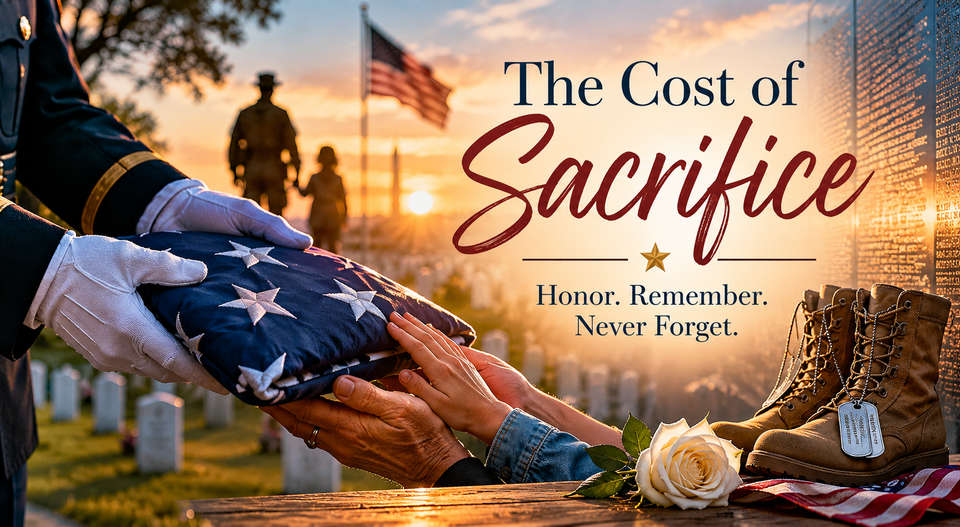
A folded flag being handed to a mother.
A spouse.
A child.
In that moment, Memorial Day stops being historical and becomes deeply human.
Even though I primarily served during peacetime, I still witnessed loss around me. Some died from illness. Some from accidents. Some from domestic violence. Some from the mental and emotional weight they carried. I also watched people struggle under pressures many civilians never fully see or understand — pressures tied to responsibility, expectations, separation from family, trauma, identity, and the relentless demands that can come with military life.
Service members willingly step into roles that require sacrifice, discipline, and commitment beyond what most people will ever experience. Over time, I’ve come to realize that Memorial Day deserves more than quick slogans, political talking points, or a long weekend disconnected from the weight behind it.
It deserves honest remembrance.
For many, the phrase “gave all” immediately brings to mind those who died in combat defending this country. And rightly so. Their sacrifice should never be minimized or forgotten.
But service can cost lives in different ways.
Some never made it home because of war.
Some died in training.
Some carried wounds that were invisible to everyone around them.
Some families waited decades for someone to come home emotionally, only to realize pieces of the person they loved never truly returned the same.
And behind every loss is a ripple effect that extends far beyond the individual service member.
Parents bury children.
Spouses rebuild lives they never expected to navigate alone.
Children grow up without a parent to call for advice, encouragement, or comfort.
Friends and communities carry absences that never fully stop echoing.
The folded flag is never handed to just one person.
Entire families carry its weight.
Living and working in Washington, DC, and spending time in places like the Pentagon and our national memorials, I was constantly surrounded by reminders of sacrifice — the World War II Memorial, the Vietnam Memorial, Arlington, the Women in Military Service Memorial, and so many others.
But over the years, I’ve realized the deepest reminders are often not the monuments themselves.
They’re the people quietly carrying the loss afterward.
Memorial Day should not become an argument.
It should not become a performance.
And it should not become so commercialized that we forget why it exists in the first place.
It is a day of remembrance.
Of gratitude.
Of reverence.
A day to honor those who gave their lives in service to this country and to remember that the cost of that sacrifice did not end with them alone.
Today, I remember honestly.
I remember respectfully.
And I remember that entire families and communities often carry the sacrifice for generations.

Comments ()