
When You Forget…Again
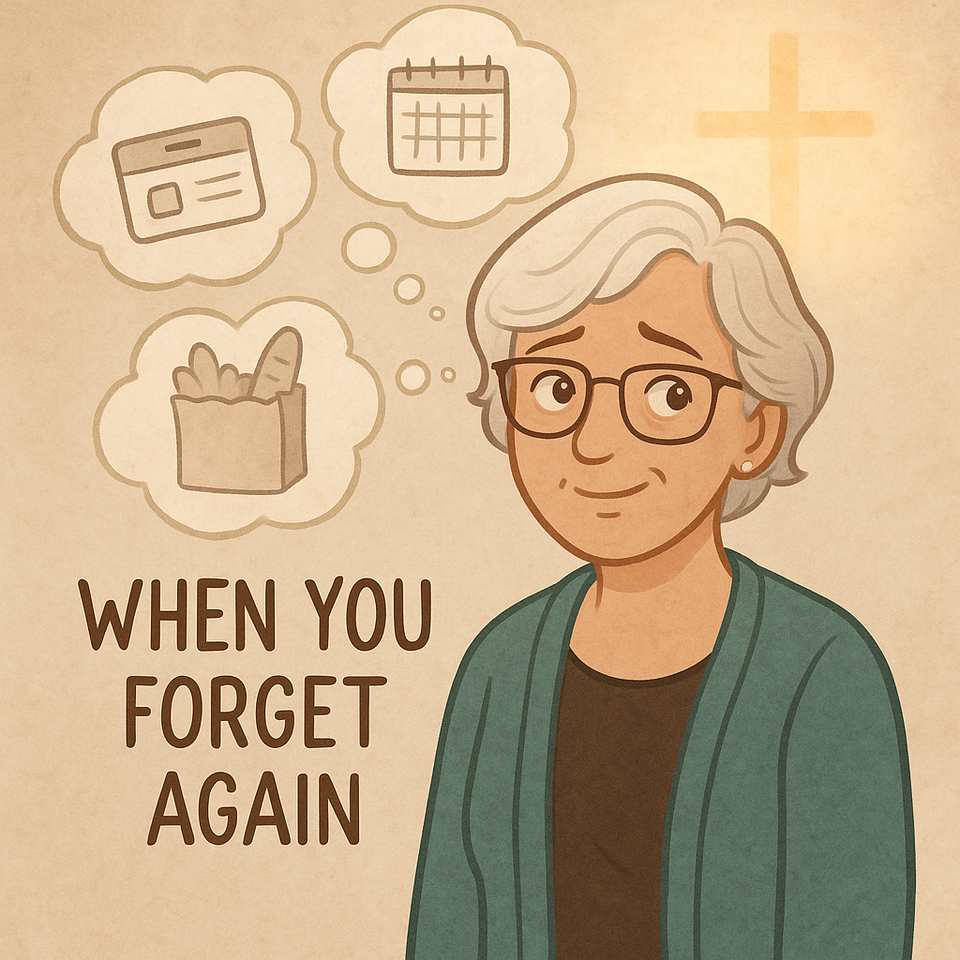
If you live with ADHD (or as I like to call it, “Neuroextra”), you probably know the sting of forgetting — a birthday, an appointment, the groceries you just went to get…why you entered a room.
For me, one of the most frustrating is names. I can picture the person. I can tell you where we met. But in the moment — sometimes while I’m looking right at them — their name vanishes like it was never there.
It’s not just new names, either. It happens with people I’ve known and worked with for years. Even my own son, who I named and love dearly. I often “know” the name, but I can’t bring it forward. It’s like there’s a drawbridge in my brain, and in that moment, it’s raised, blocking the path to the part where names are stored.
The Weight We Carry
I sometimes try to “normalize” it by telling people up front, “I will forget your name.” It helps take the edge off, but the sting is still there when it happens.
For many of us with ADHD, forgetting isn’t a rare slip-up — it’s part of daily life. And when it happens again and again, it can feel like proof we’re failing — not just in relationships, but even in our Christian walk.
Shouldn’t a good friend remember your story? Shouldn’t a good Christian remember to follow through?
The enemy is quick to slide shame into those thoughts: You’re unreliable. You’re too scattered to be trusted. God can’t use you like this.
But God’s measure of our worth has never been tied to perfect recall.
God’s Grace Covers the Gaps
The Bible is full of people who forgot — not just minor details, but the very promises of God. Israel forgot His faithfulness after the Red Sea. The disciples forgot what Jesus had told them about His resurrection.
And still, God was patient. Still, He called them His own.
Isaiah 49:15–16 says:
“Can a mother forget the baby at her breast and have no compassion on the child she has borne? Though she may forget, I will not forget you! See, I have engraved you on the palms of my hands.”
We forget. God doesn’t. And that’s why His faithfulness is the foundation we stand on.
Grace Is Not an Excuse
God’s grace is a gift, but it’s not a free pass to stop trying. Forgetfulness may be a challenge due to our wiring, but that doesn’t mean we resign ourselves to it.
We can — and should — work with coaches, doctors, therapists, family, and friends to find strategies that help us remember more often, recover more quickly when we don’t, and show respect to the people God has placed in our lives.
Grace is meant to lift the shame so we can keep learning, not to give us permission to stop growing.
Practical Ways to Live in Grace When You Forget
- Acknowledge it quickly – “I’m so sorry, your name just slipped my mind.”
- Use tools – Notes, reminders, and systems that work for you.
- Recover with kindness – A forgotten name doesn’t erase the value of the relationship.
- Practice retrieval – Repeating a name after you hear it, or recalling it later in a low-pressure moment, can strengthen the memory pathway.
From Shame to Growth
I’m learning to see forgetfulness not as proof I’m failing, but as one of the places I need God most.
When I remember, I thank Him. When I forget, I admit it, reset, and keep going — knowing my calling isn’t tied to my memory, but to His mercy.
A Moment with God
Father, You see the moments my mind blanks, the details I can’t retrieve, and the frustration that follows. Thank You for never confusing my memory lapses with my love for You or for others. Please guide me toward strategies that help me remember well and recover quickly when I don’t. Shape my heart to offer the same grace to others that You so freely give to me. We pray this in Jesus’ name, Amen.



Comments ()