
Obstacle or Excuse? Watch What Happens Next

Somewhere in the middle of a conversation with my friend Megan, she said something that stopped me for a second because I immediately knew she was onto something:
“The difference between an obstacle and an excuse is what happens after it’s removed.”
The more I thought about it, the more I realized how much truth is packed into that one sentence.
When it comes to leadership and accountability, there’s a reality we don’t always want to admit: sometimes people truly are blocked from moving forward — and sometimes they aren’t.
If removing the barrier allows someone to move forward, take action, and accomplish the task, then the thing really was an obstacle.
But if the original problem disappears and is immediately replaced with a new reason it still can’t happen, there’s a good chance the original issue wasn’t the real problem at all.
That doesn’t automatically make someone lazy.
And honestly, I think that distinction matters.
Because what we casually label as “excuses” are often far more complicated than people realize.
Sometimes the real issue is fear.
Fear of failure.
Fear of success.
Fear of disappointing people.
Fear of being judged.
Fear of finally trying and discovering we aren’t as capable as we hoped.
Sometimes it’s shame.
Sometimes burnout.
Sometimes grief.
Sometimes overwhelm so deep that the brain keeps searching for a socially acceptable explanation because the real answer feels too vulnerable to say out loud.
Sometimes it’s ADHD paralysis, perfectionism, lack of confidence, lack of clarity, or simply not knowing where to begin.
And sometimes people truly do have legitimate obstacles standing in front of them.
Health problems.
Financial limitations.
Lack of transportation.
Insufficient training.
Broken systems.
Bad leadership.
Lack of support.
Those things are real.
But leadership — whether in business, coaching, parenting, ministry, or even self-leadership — gets messy when we stop at simply identifying the obstacle.
Because removing barriers is only part of the equation.
What happens after the barrier is removed often tells us far more about what is actually driving the behavior.
If the person suddenly begins progressing, contributing, engaging, or succeeding, then great. The obstacle was real, and removing it mattered.
That’s good leadership.
But if the obstacle disappears and another one immediately takes its place, leaders eventually have to stop focusing only on the surface problem and ask deeper questions.
Not accusatory questions.
Honest ones.
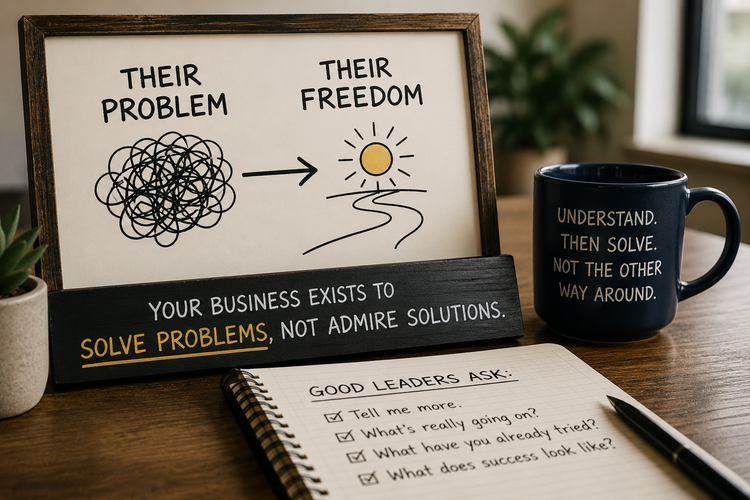
What is actually happening here?
What fear is underneath this pattern?
What skill is missing?
What belief is driving the avoidance?
What discomfort are they trying to escape?
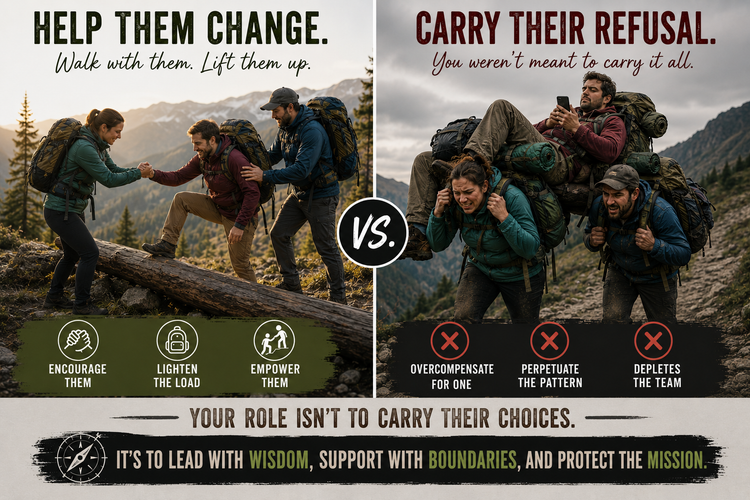
Because leaders who repeatedly remove barriers without addressing deeper patterns often end up trapped in cycles that never actually create change.
At some point, support without accountability stops being support.
It becomes enablement.
That’s true in organizations.
It’s true in families.
It’s true in friendships.
And if we’re honest, it’s true in our relationship with ourselves too.
I’ve watched this happen in leadership environments where someone always had another explanation for why progress wasn’t happening. Every solved issue simply uncovered the next reason nothing could move forward.
Eventually, the pattern itself became the issue.
Not because the person was bad.
Not because they lacked value.
But because the real problem was no longer the obstacle.
Sometimes the answer is coaching.
Sometimes the answer is training.
Sometimes the answer is reducing overwhelm or increasing support.
Sometimes the answer is helping someone move into a role better aligned with their strengths.
And sometimes the hard truth is that the person either cannot or will not change in the current environment.
Good leaders have to recognize when continued accommodation is no longer helping anyone.
Sometimes leadership means changing the role.
Sometimes it means changing the team.
And sometimes it means changing the person.
Not out of cruelty.
Not out of impatience.
But because healthy leadership also requires stewardship of the mission, the team, and the people carrying the weight around them.
That discernment matters.
Because good leadership doesn’t stop at identifying obstacles.
It pays attention to what happens after those obstacles are removed.
That’s often where the real issue reveals itself.
And that’s where leaders — and honestly, all of us — begin finding solutions that actually stick.

Comments ()