Sometimes the SEAL Needs a Traffic Light — Sometimes the Roadblock Needs a SEAL
I recently wrote about the difference between obstacles and excuses.
Writing that blog — and the conversation that triggered it — led me somewhere else entirely:
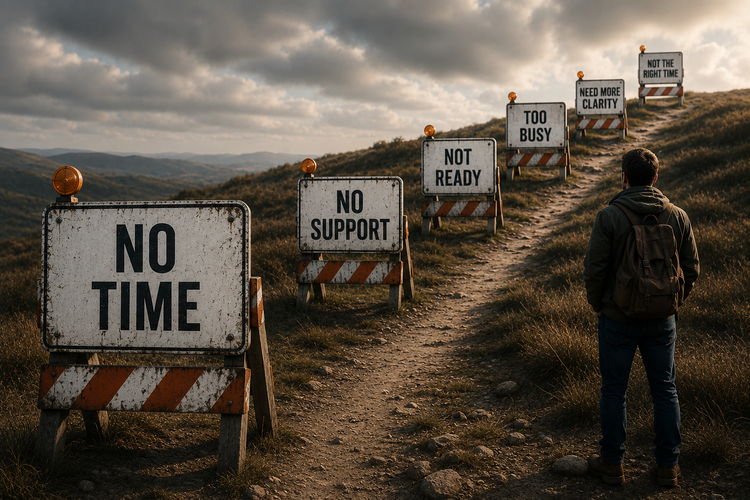
When people hit a roadblock, we don’t all respond the same way.
- Some people stop and wait patiently for instructions.
- Some reroute immediately.
- Some push harder.
- Some turn around and go home.
- Some climb over the barrier before anyone else has even finished reading the warning sign.
None of those reactions are automatically right or wrong.
But they do reveal something important we should know: our default response to resistance.
Most of us overuse our default.
There Are People Who Respect the Process
Some people are naturally wired to respect the process.
They stay in line.
Wait their turn.
Follow procedure.
Trust the system to eventually clear the blockage.
There’s value in that.
Those people often create stability.
They prevent chaos.
They reduce unnecessary risk.
They keep organizations, families, and teams from becoming reaction-driven messes.
But there’s a downside too.
- Sometimes respectful patience slowly turns into learned helplessness.
- Sometimes people wait for permission long after they should have taken initiative.
- Sometimes the road never clears because everyone is standing around waiting for someone else to move first.
There Are People Who Treat It Like an Obstacle Course
Then there’s the other type.
The people who see every roadblock like an obstacle course.
The military mindset.
The entrepreneur mindset.
The “there has to be another way” mindset.
These are the people who instinctively look for a route over, under, around, or through the problem.
They adapt quickly.
They improvise.
They refuse to stay stuck.
Organizations often praise these people because they can accomplish things others can’t.
- Until they become exhausting.
- Until the solution starts creating new problems.
Truth is, highly adaptive people often overuse their strengths.
The thing that makes me effective is also the thing most likely to create problems if I use it indiscriminately.
The person who can solve anything may start bypassing necessary process.
The leader who moves fast may create unnecessary collateral damage.
The fixer may become incapable of sitting still long enough to recognize that sometimes the process exists for a reason.
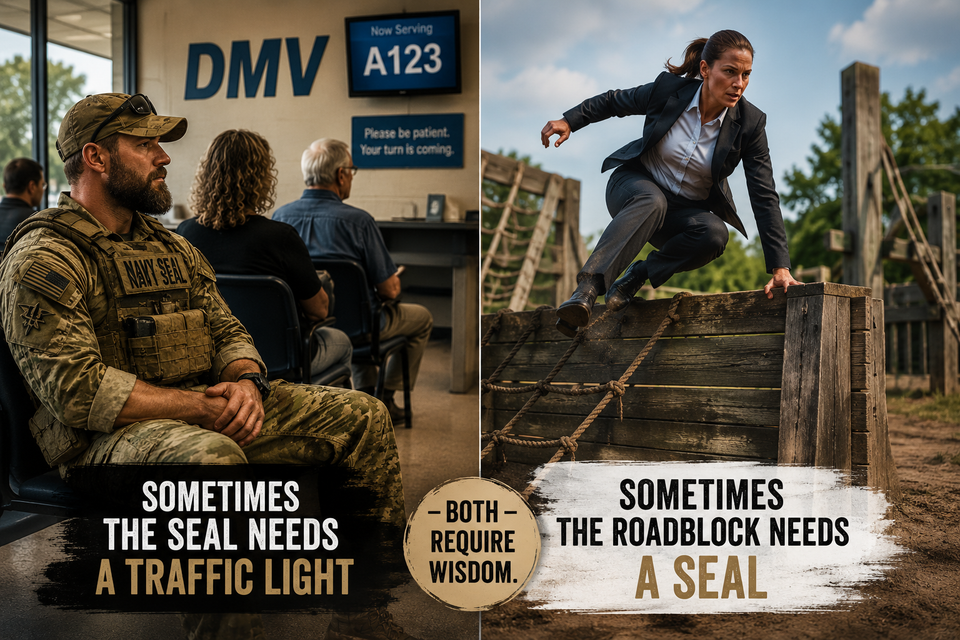
Sometimes the SEAL needs a traffic light.
But the reverse is also true.
Sometimes the roadblock needs a SEAL.
Sometimes the situation actually requires someone willing to think differently, move decisively, challenge assumptions, and stop waiting for ideal conditions before acting.
The Hard Part Is Knowing Which Moment You’re In
Wisdom is knowing which moment you’re in.
And that requires something many people avoid: honest self-awareness.
When pressure shows up – Who do you become?
Do you freeze?
Wait?
Push?
Adapt?
Retreat?
Challenge?
Overcompensate?
Take over?
And maybe more importantly:
How do the people around you experience you in those moments?
Because the traits that make us effective are often the exact traits that create our biggest blind spots when left unchecked.
The adaptable person may need restraint.
The cautious person may need courage.
The process-driven person may need initiative.
The relentless person may need wisdom.
The patient person may need urgency.
Why Healthy Teams Matter
And this is also why healthy teams and relationships matter. Very few people naturally recognize their own blind spots in real time.
The process-driven person often needs someone beside them willing to say:
“Stop waiting. Move.”
The obstacle-course person often needs someone grounded enough to say:
“This barrier exists for a reason.”
Some of the best leaders, spouses, friends, and teams aren’t made up of people who think alike. They’re built from people who understand each other well enough to recognize when someone’s greatest strength is starting to work against them.
Sometimes we need people who help us push forward.
Sometimes we need people who help us slow down long enough to avoid creating a bigger mess.
That’s not weakness.
That’s wisdom.
Maturity is not becoming someone else entirely. It’s learning when your natural instinct is serving the moment…and when it’s quietly sabotaging it.
The goal isn’t to stop being who you are.
The goal is to become flexible enough that you are choosing your response intentionally instead of simply reacting from habit.
Sometimes wisdom looks like respecting the barrier.
Sometimes wisdom looks like climbing over it.
The hard part is knowing the difference.

Comments ()