
Why Tools Matter for the Neuroextra Brain
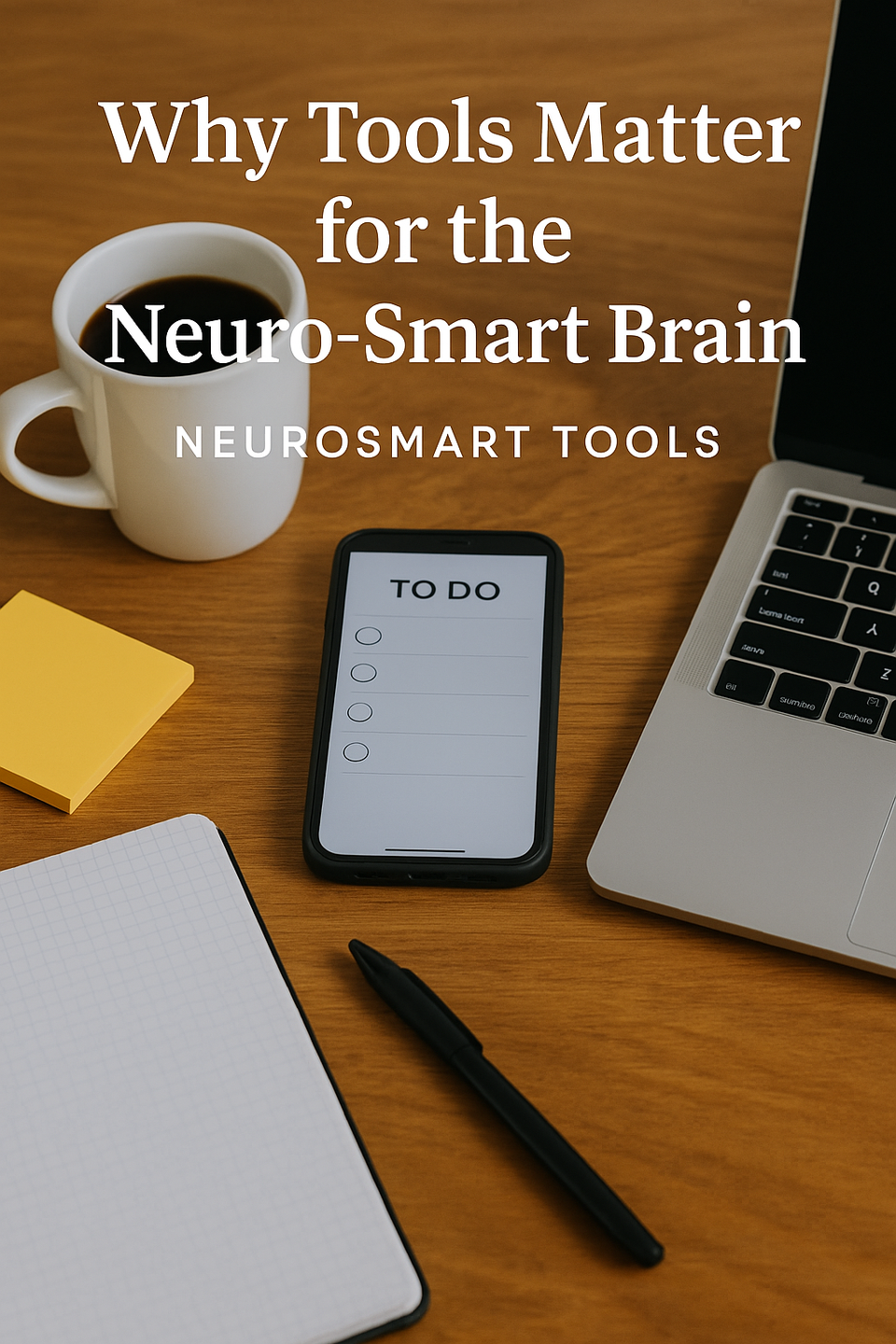
I’ve said it before, and I’ll say it again:
Our brains were never meant to hold it all.
We live in a world that praises multitasking, productivity hacks, and “just try harder” mantras—but the truth is, none of us were designed to carry the entire load in our heads.
I first learned this as a young airman in the Air Force.
I worked in an environment filled with hundreds of thousands of technical manuals, regulations, and instructions. The volume of information was staggering.
My success didn’t depend on memorizing everything.
It depended on knowing where to find it—and how to look it up.
That shift changed how I think about tools.
Tools are not a crutch.
They are a bridge.
And here’s the part that matters:
Neuroextra tools aren’t just for ADHD brains or those of us who identify as neurodivergent.
A true Neuroextra tool works because it aligns with how any brain functions best.
Whether you’re a new mom running on little sleep, a teen navigating school pressure, a busy executive juggling deadlines, or a mature adult facing health or memory challenges—the right tools help you function and thrive.
PTSD, trauma recovery, stress, or just the daily grind of life…
All of these become more manageable with the right supports in place.
That’s why tools matter—across every stage of life and every type of person.
When I talk about “tools,” I don’t just mean sticky notes or alarms.
Tools can be:
• A well-designed app that helps you follow through
• A whiteboard, timer, or visual system
• A sensory reset that calms your nervous system
• A supportive person who sits with you while you finish something
Some tools are external.
Some are relational.
Some are internal.
All of them matter.
The right tools reduce friction.
They create margin.
They let you spend your energy on what actually matters—instead of remembering, managing, or recovering from what slipped through.
And here’s the deeper truth:
Tools matter because they tell the truth.
Every brain has limits.
Pretending otherwise leads to burnout.
Owning our need for support doesn’t make us weak.
It makes us wise.
Think about it:
How many of us would attempt calculus today without a calculator?
Or consider this—
At one point, it was illegal in some places for doctors to use cars to reach patients.
Imagine the limitation.
Tools don’t replace people.
They empower people.
Using tools isn’t shameful.
It’s a smart strategy.
And this doesn’t stop with personal life.
We’ll also explore tools that streamline business operations—because chaos at work is just as draining as chaos at home.
The same principles apply whether you’re managing your schedule, running a household, or building a business.
That’s why I’m calling this series:
Neuroextra Tools.
Over the coming weeks, we’ll walk through tools that help us:
• Anchor attention
• Remember what matters
• Regulate emotions
• Stay connected
• Run businesses with more ease and less burnout
Along the way, I’ll also review specific tools—apps, systems, and strategies I’ve tested or seen work in real life.
You’ll get both the “why” and the “what,” so you can try them for yourself.
This isn’t about becoming “normal.”
It’s about building a life that works with who you are—not against it.
So let’s get started.
Because you were never meant to carry it all in your head.
And you don’t have to.


Comments ()